
In contemporary high-end residential design, storage is no longer viewed simply as a functional necessity. Instead, it has evolved into a systematic design language closely tied to spatial order, lifestyle, and the overall living experience. Particularly in modern Australian homes, an increasing number of luxury residential projects are emphasizing spatial integration, visual restraint, and concealed functionality. Homeowners today are no longer satisfied with merely having “more storage space”; they are increasingly focused on how a home can maintain a clean, calm, and refined atmosphere over time.
This shift reflects a broader evolution in modern living concepts.
Traditional residential design focused primarily on functionality, where storage simply meant “having enough space to put things away.” As a result, many conventional homes solved storage needs by continuously adding more cabinets. However, with the development of modern residential aesthetics, people have gradually realized that what truly impacts the living experience is not merely storage capacity, but whether a space can maintain a long-term sense of order. When countertops are filled with appliances, personal belongings are left exposed, and everyday clutter occupies visible areas, even the most expensive interior finishes struggle to create a genuinely sophisticated atmosphere.
As a result, storage systems in today’s luxury homes have taken on a much broader role. They are no longer purely functional systems, but an essential component of spatial aesthetics. Truly successful storage design is not simply about “hiding things away”; it is about allowing a space to remain visually calm, restrained, and organized while still fully supporting everyday living needs.
This trend is closely connected to the popularity of open-plan living in Australian residential design. In recent years, many high-end Australian homes have adopted highly integrated layouts where the boundaries between living room, dining area, and kitchen are increasingly blurred. The kitchen is no longer viewed solely as a cooking zone, but rather as the social and functional center of the home. Dining and living areas are also becoming part of one continuous public space. Within this type of layout, storage directly affects not only usability, but also the overall visual order of the home.

The greatest challenge of open-plan living is that traces of daily life become highly visible. Small appliances on kitchen counters, shoes and coats near the entry, children’s items in the living room, or miscellaneous everyday objects can quickly disrupt the overall harmony of a space. For this reason, contemporary luxury homes increasingly emphasize “pre-planned storage design.” In other words, storage systems are considered from the earliest stages of spatial planning, rather than being treated as an afterthought once the home is occupied.
In modern kitchen systems, for example, designers now carefully plan pantry storage, concealed appliance zones, cleaning tool storage, and categorized organization systems based on frequency of use. Walk-in wardrobes are divided into hanging sections, drawer systems, bag display areas, and accessory storage. Entry areas are designed to integrate shoe storage, coat hanging, key placement, and temporary item organization. The core of this systematic approach is not simply adding more cabinetry, but ensuring that every aspect of daily living has a clearly defined spatial solution.

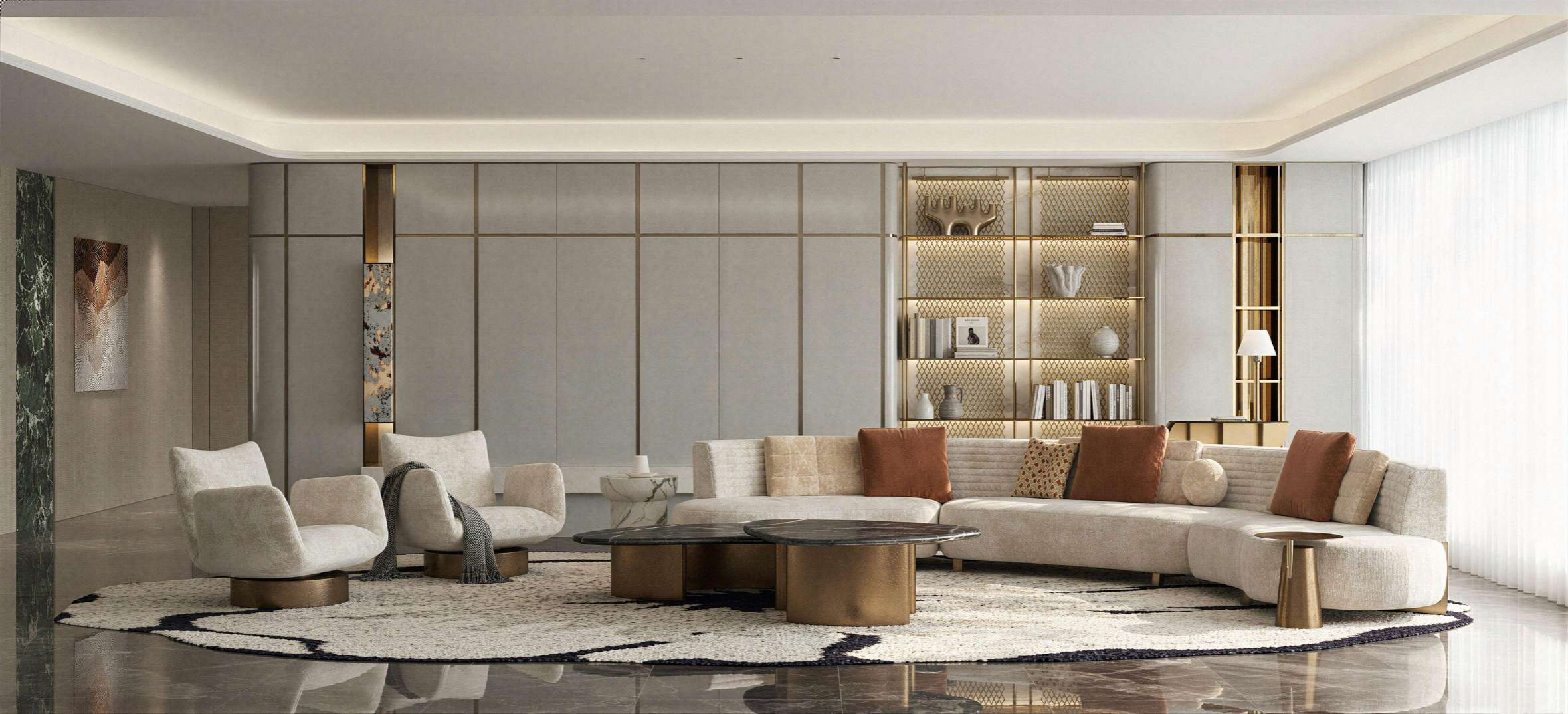
At the same time, cabinetry itself is becoming increasingly architectural. In the past, cabinets were often treated as standalone furniture pieces. Today, however, more luxury residences embrace the concept of “Cabinetry as Architecture.” Cabinet systems are no longer viewed merely as storage tools, but as an integrated part of the architectural structure. Full-height cabinetry, concealed doors, handle-free systems, and wall-integrated cabinet designs are now widely used to minimize the traditional “furniture-like” appearance of storage systems and create cleaner, more cohesive spaces.
Behind this design trend lies a broader logic of reducing visual distraction. Exposed handles, excessive detailing, and fragmented cabinet lines tend to interrupt spatial continuity. Contemporary minimalist homes instead prioritize proportion, consistency, and visual simplicity. As a result, handle-free systems, ultra-slim shadow gaps, concealed structures, and unified material palettes have become key elements in modern luxury interiors. The goal is not simply to pursue minimalism as a style, but to reduce unnecessary visual information and create spaces that feel calmer, lighter, and more refined.

At the same time, cabinetry itself is becoming increasingly architectural. In the past, cabinets were often treated as standalone furniture pieces. Today, however, more luxury residences embrace the concept of “Cabinetry as Architecture.” Cabinet systems are no longer viewed merely as storage tools, but as an integrated part of the architectural structure. Full-height cabinetry, concealed doors, handle-free systems, and wall-integrated cabinet designs are now widely used to minimize the traditional “furniture-like” appearance of storage systems and create cleaner, more cohesive spaces.
Behind this design trend lies a broader logic of reducing visual distraction. Exposed handles, excessive detailing, and fragmented cabinet lines tend to interrupt spatial continuity. Contemporary minimalist homes instead prioritize proportion, consistency, and visual simplicity. As a result, handle-free systems, ultra-slim shadow gaps, concealed structures, and unified material palettes have become key elements in modern luxury interiors. The goal is not simply to pursue minimalism as a style, but to reduce unnecessary visual information and create spaces that feel calmer, lighter, and more refined.
Truly high-end residential design is never focused solely on visual appearance; it is deeply connected to the realities of everyday life. The growing emphasis on “invisible functionality” reflects a desire to create homes that remain organized, efficient, and comfortable over long periods of use. A well-designed storage system should not force homeowners to constantly think about tidying up. Instead, the design itself naturally supports order and ease of living.

As a result, concealed design strategies have become a defining feature of modern luxury residences. From handle-free cabinetry and concealed lighting systems to integrated appliances, floating structures, and ultra-precise detailing, contemporary homes are increasingly moving toward a “de-objectified” spatial language. Functionality still exists, but it is no longer visually dominant. Instead, the focus shifts toward light, proportion, materials, and the relationships between spaces.
Ultimately, the storage logic of contemporary high-end residences is fundamentally an expression of “hidden order.” It is not simply about maximizing storage capacity, nor is it solely about achieving minimalism. Rather, it is about integrating functionality seamlessly into the architecture itself, allowing traces of daily life to be organized and concealed in a more refined and elegant manner. The result is not just a clean home, but a calmer, more restrained, and more comfortable way of living that aligns with the rhythm of modern life.
Block Quote