
The lowest custom joinery quotation is not always the lowest delivered cost. A proposal can look competitive because it prices only the visible cabinets, while leaving non-standard dimensions, finished end panels, internal accessories, drawing revisions, export packing or installation support to be charged later.
These omissions are difficult to see when quotations use different formats or are based on incomplete drawings. They are especially important in whole home and overseas projects, where one order may include kitchens, wardrobes, bathroom vanities, wall panels, interior doors and living room cabinetry. A small gap in scope can be repeated across several rooms.
In this guide, a hidden cost means any cost, allowance or responsibility that is not clearly identified in the initial custom joinery quotation. It does not always indicate deliberate underpricing. The practical risk is the same: the client cannot compare suppliers accurately or control the final budget. The five areas below should be confirmed in writing before a contract or production order is approved.
Custom cabinetry is priced against a defined scope. If the design is still at concept stage, the supplier must make assumptions about dimensions, materials, hardware, construction details and delivery. Different assumptions produce different totals even when the renderings look similar.
A short quotation may also combine fixed prices, provisional allowances and exclusions without explaining the difference. For example, it may include cabinet carcasses and doors but exclude visible side panels, feature lighting, destination charges or on-site installation. The total is not necessarily wrong, but it is incomplete until those boundaries are clear.
Before comparing prices, make sure every supplier is working from the same information:
· The same architectural drawings, joinery elevations and revision date.
· The same room-by-room product scope and quantities.
· The same material, finish and hardware expectations.
· The same shipping term, destination and installation responsibility.
· The same requirements for shop drawings, samples, quality checks and project support.
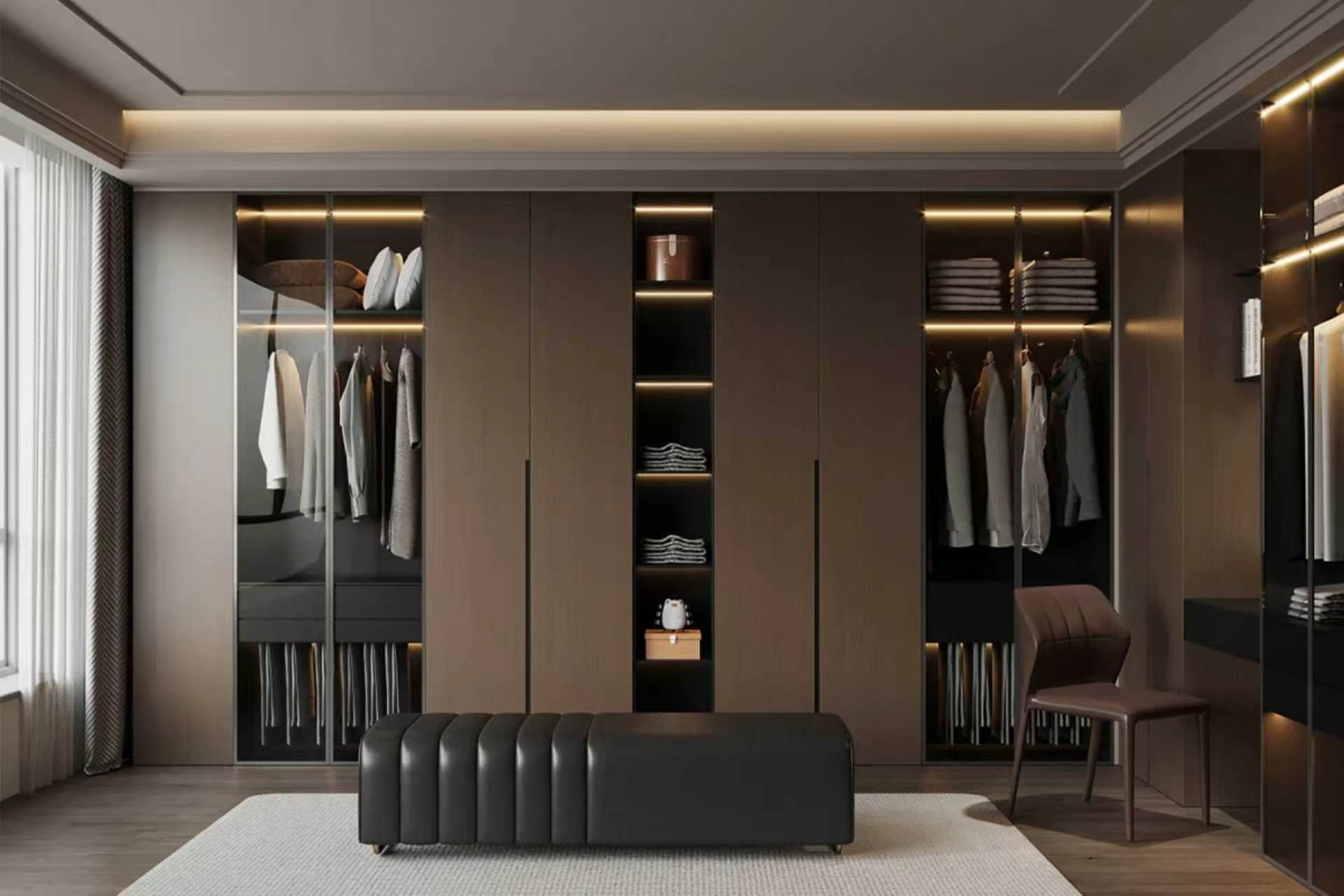
Most manufacturers have efficient production ranges for panel sizes, door heights, cabinet depths and construction methods. Those ranges are supplier-specific. Once a design requires larger panels, thicker shelves, deeper cabinets, floating structures or unusual shapes, material yield and manufacturing time can change.
Items that often need separate pricing include:
· Full-height or extra-wide doors that require a different substrate, reinforcement or hardware solution.
· Deeper cabinets for appliances, mechanical services or specialist storage.
· Thick shelves, long unsupported spans and concealed structural frames.
· Curved, angled, bevelled or polygonal panels and islands.
· Book-matched veneer, continuous grain layouts and large-format feature panels.
· Integrated appliance fronts, pocket-door systems and other complex moving elements.
Ask the supplier to state the dimensions and construction method included in the quote. Any element outside the assumed range should be identified on the drawing and priced as a line item or a clearly described allowance. A price per linear metre is rarely enough for complex whole home joinery.
· Which dimensions or construction types are treated as standard in this proposal?
· Which tall, wide, deep, curved or reinforced items carry an additional cost?
· Is the price tied to the current drawing revision and confirmed site dimensions?
· What happens if the final site measurement changes after approval?
A cabinet schedule may describe doors and carcasses without fully pricing the panels that complete the installation. Exposed end panels, top fillers, ceiling closures, scribes, plinths, finished backs, shadow-line details and metal trims can materially affect both appearance and cost.
The difference is most visible where cabinetry meets a wall, ceiling, doorway or adjacent material. A simple painted filler and a veneered feature panel with continuous grain are not equivalent. The same applies to an ordinary board edge and a purpose-designed junction between cabinetry, wall panels and an interior door.
Review the elevations and reflected views, not only the floor plan. Every visible surface should have a finish reference. The quote should also state whether fillers and scribes are supplied oversized for site adjustment, prefinished to a confirmed dimension or completed by another trade.
· Are exposed cabinet sides finished to match the doors or the carcass?
· Are end panels, fillers, scribes, top closures, plinths and finished backs included?
· How are cabinetry junctions with walls, ceilings, doors and wall panels detailed?
· Are metal trims, shadow-line profiles and special edge treatments included?
Hardware descriptions such as premium hinges or imported runners are too general for a reliable quotation. Price and performance depend on the brand, series, model, finish, load requirement and quantity. Two wardrobes can use the same door finish but have very different hardware costs if one includes standard shelves and the other includes drawers, pull-out shoe storage and lift-down hanging rails.
Internal storage should therefore be designed before the price is approved. Drawer quantities, jewellery inserts, trouser racks, pull-out baskets, rotating fittings, wardrobe lifts and waste systems are usually priced per unit. Adding them after manufacturing begins may also require new drilling, panel replacement or a different cabinet width.
Integrated lighting needs its own scope. Confirm the LED strip, aluminium channel, diffuser, driver or transformer, sensor, switch, cable routing and access for future maintenance. The quotation should identify which components are supplied with the joinery and which electrical connections must be completed by a licensed local trade.
BAODAO HOME project specifications can include hardware from brands such as UNIHOPPER and Blum, depending on the approved application and budget. The quotation and hardware schedule should name the selected product rather than relying on a general brand promise.
· Does the hardware schedule show the brand, model, finish and quantity?
· Which items are standard, optional or provisional allowances?
· Are internal accessories shown in the price for each cabinet?
· Does the lighting price include channels, drivers, sensors and cabling, and who completes the electrical connection?
· How will any proposed hardware substitution be approved?
A rendering communicates the intended appearance, but it does not provide enough information for manufacturing. Production-ready joinery normally requires coordinated shop drawings, material schedules, hardware references, appliance details, service clearances and approved samples. These services take time and should be visible in the proposal.
Confirm how many drawing and sample stages are included, who supplies final site dimensions and who approves the production information. A finish sample may be sufficient for a straightforward laminate door, while natural veneer, special lacquer colours, curved profiles or mixed-material doors may require larger samples or prototypes.
Changes also need a defined process. A revision made before production may affect design time and material orders. A change after cutting or finishing can require remanufacture, new hardware or replacement freight. The contract should explain how variations are described, priced and approved before work continues.
At BAODAO HOME, approved drawings, finish references and hardware selections form the production reference for relevant project items. This connection between design information and factory execution helps the project team understand what the price covers and gives quality-control staff a defined basis for inspection.
· Are shop drawings, finish samples and hardware schedules included?
· How many revision rounds are included before additional design fees apply?
· Who verifies site dimensions and coordinates appliances and services?
· What written approval is required before material purchasing and production begin?
· How are client changes and factory-proposed changes recorded and priced?

The factory price is only one part of an overseas joinery budget. The agreed shipping term should make responsibility clear from the factory to the site. Depending on the contract, costs may include export packing, domestic transport, freight, insurance, customs documentation, destination clearance, duties and taxes, port charges, local delivery, unloading, lifting, storage and installation.
Site conditions can also change the delivery cost. Restricted vehicle access, limited lift dimensions, upper-floor carrying, crane requirements, short unloading windows and unsuitable storage may require additional labour or equipment. These conditions should be discussed before the shipping plan is finalised.
Installation needs a separate scope even when it is coordinated by the supplier. Confirm who checks site readiness, unloads and distributes packages, installs and adjusts the joinery, connects services, protects completed work, removes waste and handles defects or replacement parts. For overseas projects, also confirm whether support is provided remotely, through a local partner or by a travelling technical team.
BAODAO HOME prepares relevant items through factory inspection, pre-assembly, package identification and protective packing before international shipment. The quotation should still identify the exact delivery and installation services included for the project. No logistics arrangement should be assumed to cover freight, duties or on-site work unless the contract states that responsibility.
· What shipping term and named destination apply to the price?
· Are export packing, freight, insurance, clearance, duties and local delivery included or excluded?
· Who unloads, stores, distributes and installs the packages on site?
· What site access information is needed before delivery?
· What support is included for installation questions, damaged items or missing parts?
A useful quotation allows the client to trace the price back to an approved scope. Before signing, look for the following information in the quotation, schedules, drawings or contract attachments:
· Project name, quotation date, validity period, currency and applicable taxes.
· The drawing set and revision used for pricing.
· A room-by-room list of cabinets, doors, wall panels and other joinery items.
· Substrates, finishes, thicknesses, visible edge treatments and approved sample references.
· Hardware brands, models, quantities and internal accessories.
· Lighting components and the boundary between joinery and electrical work.
· Shop drawing, sample, approval and revision responsibilities.
· Factory inspection, pre-assembly and client acceptance requirements where relevant.
· Packing method, package labelling, shipping term and delivery destination.
· Installation scope, site responsibilities and technical support.
· Clear inclusions, exclusions, provisional allowances and optional upgrades.
· Variation approval, payment stages, warranty and claims procedures.

Use the questions below in the final commercial review. Record the supplier's answers in writing and attach updated schedules or drawings to the agreement.
1. Can every priced item be matched to a room, drawing or schedule?
2. Are non-standard sizes and complex details already identified?
3. Are all visible panels, fillers, scribes and junction trims included?
4. Are hardware and accessories listed by model and quantity?
5. Is integrated lighting fully scoped, including drivers and controls?
6. Are drawing, sample and revision services defined?
7. Are allowances separated from fixed-price items?
8. Are exclusions written clearly rather than discussed only in a meeting?
9. Does the shipping term identify who pays at each logistics stage?
10. Are site access, unloading, storage and installation responsibilities clear?
11. Is there a written variation process for later changes?
12. Does the final proposal explain warranty and replacement-part support?
BAODAO HOME operates an approximately 100,000 square metre headquarters and manufacturing base in Foshan with more than 15 professional production lines. The facility supports whole home packages that can include custom kitchens, wardrobes, bathroom vanities, living room cabinetry, wall panels and interior doors.
Factory scale is useful only when project information remains connected throughout the process. BAODAO HOME coordinates design development, material and hardware confirmation, manufacturing, quality checks, relevant pre-assembly, packing and export preparation against the approved project scope. This gives architects, builders, developers and homeowners a clearer record of what will be produced and delivered.
A detailed proposal cannot prevent every change. Site conditions, design revisions and client selections can still affect price and programme. The purpose of a transparent process is to identify those variables early, document decisions and avoid treating important work as an unexpected add-on at the end of the project.

It should identify the room-by-room scope, dimensions, substrates, finishes, hardware, accessories, drawings, samples, quality checks, packing, shipping term, installation responsibility, exclusions, allowances, payment stages and validity period. The price should reference the drawings and schedules used to prepare it.
A lower quotation may be based on a smaller scope, different materials, generic hardware, fewer accessories or limited delivery services. It may also use allowances for items that have not been selected. Compare the complete delivered scope before treating the total as a saving.
There is no universal rule. Some quotations include them, while others price only the main cabinets and doors. Ask the supplier to mark every exposed panel, filler, scribe, top closure, plinth and finished back on the drawings and in the finish schedule.
Only if the quotation and shipping term say so. Freight, insurance, customs clearance, duties, taxes, port charges, local delivery, unloading and installation may be divided between several parties. Each responsibility should be named before the contract is signed.
Accuracy improves when the product scope, dimensions, finishes, hardware, appliances, site conditions and delivery responsibilities are confirmed. An early estimate can support budgeting, but production pricing should be tied to coordinated drawings and written specifications.
Give both suppliers the same drawings and requirements. Then compare the same rooms, materials, hardware, technical services, quality checks, packing, shipping term and installation support. Add the likely cost of omitted work before comparing totals.
No. Construction projects can change because of site conditions, design development or client decisions. A clear variation process limits uncertainty by defining how a change is documented, priced and approved before production or installation continues.
The best time to control hidden costs is before the production order is signed. A complete scope gives the client a more dependable budget and gives the manufacturer a clear basis for drawings, material purchasing, production, inspection and delivery.
If you are planning a villa, apartment, townhouse, hotel or other whole home joinery project, share your drawings, room schedule, finish preferences, hardware requirements, project location and expected delivery scope with BAODAO HOME. Our team can review the information, identify missing decisions and prepare a proposal based on the actual project requirements.
Contact BAODAO HOME about your custom joinery project

Block Quote