
For architects, builders and project teams sourcing custom cabinetry from overseas, product quality is not determined by manufacturing alone. What happens after production - inspection, trial assembly, labelling, protective packaging and container loading - can have a direct impact on installation time, project coordination and the final finish on site.
A missing fitting, inaccurate drilling position, uneven door gap or unprotected lacquered panel may appear to be a small issue inside a factory. Once the shipment has travelled thousands of kilometres, however, the same issue can cause rework, replacement freight and delays for multiple trades.
That is why Baodao Home treats outbound inspection and delivery preparation as part of the manufacturing process. Before custom cabinets and joinery leave our Foshan factory, the order moves through a structured quality-control workflow designed to identify problems early, verify assembly logic, protect different materials and keep packages traceable for the destination team.
Our factory principle: Solve as many problems as possible before the cabinetry leaves the factory, so the project team receives fewer uncertainties on site.
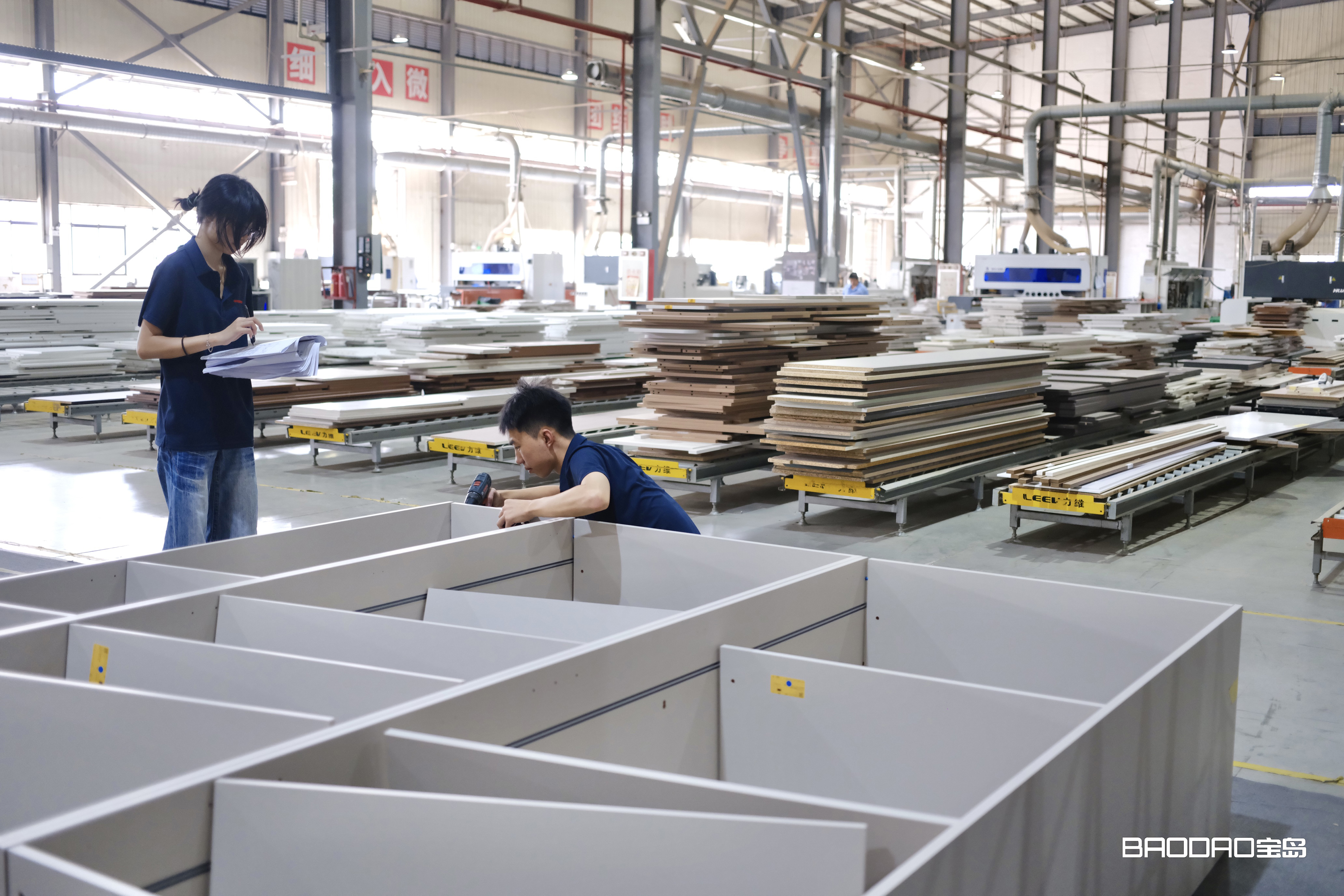

Overseas cabinetry for villas, apartments, townhouses and commercial interiors passes through several stages after production. Packages may be moved into storage, loaded into a container, transported by sea, transferred through a port, delivered locally and handled again during installation.
Each additional movement creates risk. Painted surfaces can be scratched, glass can be shocked, long aluminium profiles can be bent, hardware can be mixed between rooms, and small dimensional errors can become visible only when adjacent modules are installed together.
A reliable custom cabinetry manufacturer therefore needs to control more than panel production. The factory must also confirm that the finished components match the approved design, connect correctly, operate smoothly, arrive protected and can be identified quickly by the installation team.
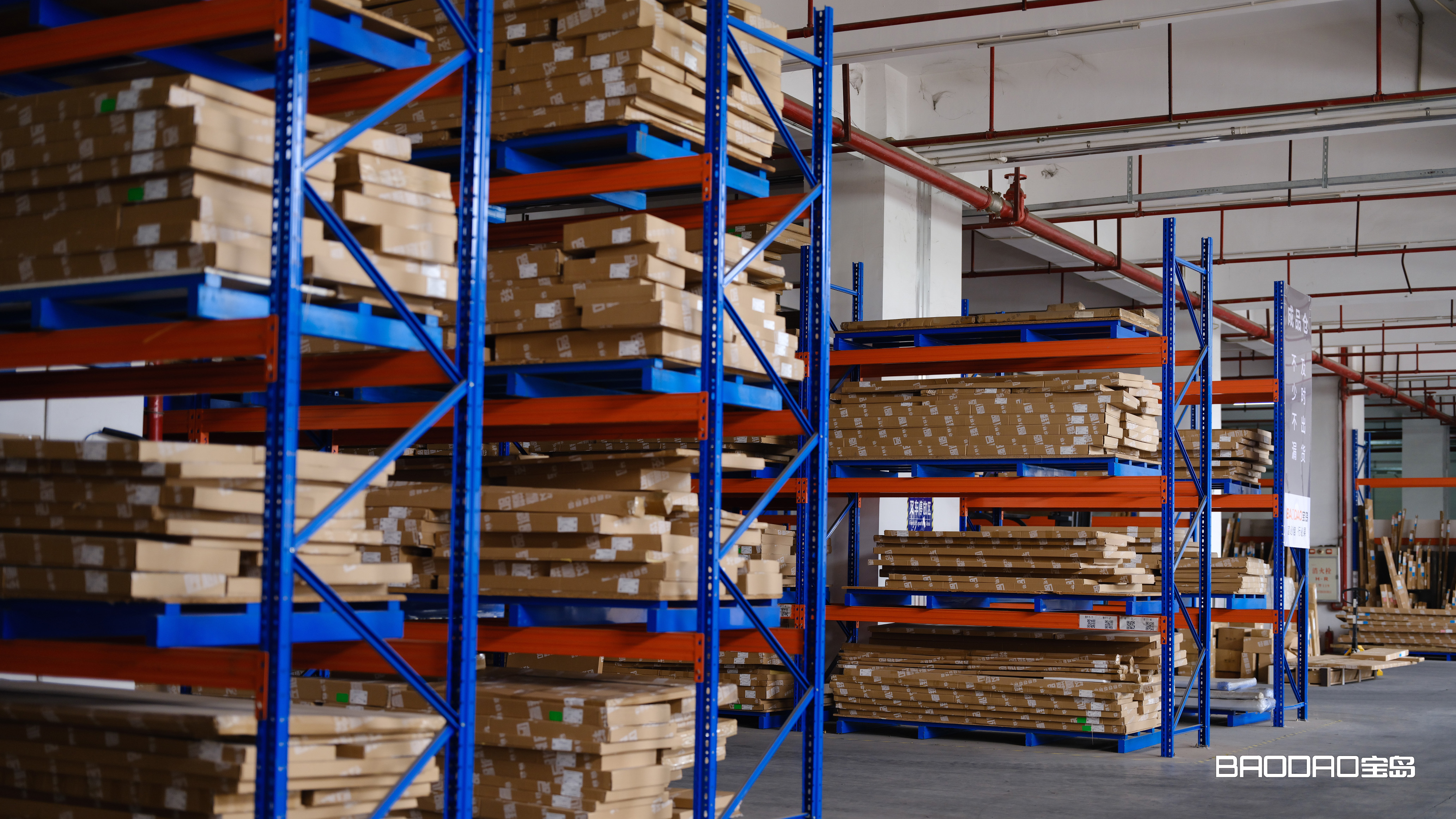
1. Check finished components against approved drawings and production records.
2. Inspect dimensions, machining, edge banding, surfaces, finishes and hardware.
3. Pre-assemble relevant cabinetry to verify fit, function, structure and visual alignment.
4. Correct identified issues and complete a secondary acceptance check.
5. Label packages by project, room, cabinet or module and consolidate accessories.
6. Apply material-specific protective packaging for long-distance transport.
7. Reconcile the packing list, plan the loading sequence and load the container.
The acceptance process begins by matching completed parts with the approved shop drawings, production information and project list. This establishes the reference for the checks that follow and helps the quality-control team confirm that the correct materials, dimensions, finishes and hardware have been produced for each area.
For a whole-house cabinetry project, this may include kitchens, wardrobes, bathroom vanities, wall panels, interior doors, display cabinets, TV units and other custom joinery. Reviewing each component within its room and module context is important because an apparently correct individual panel can still create a problem when it meets an adjacent cabinet or wall finish.
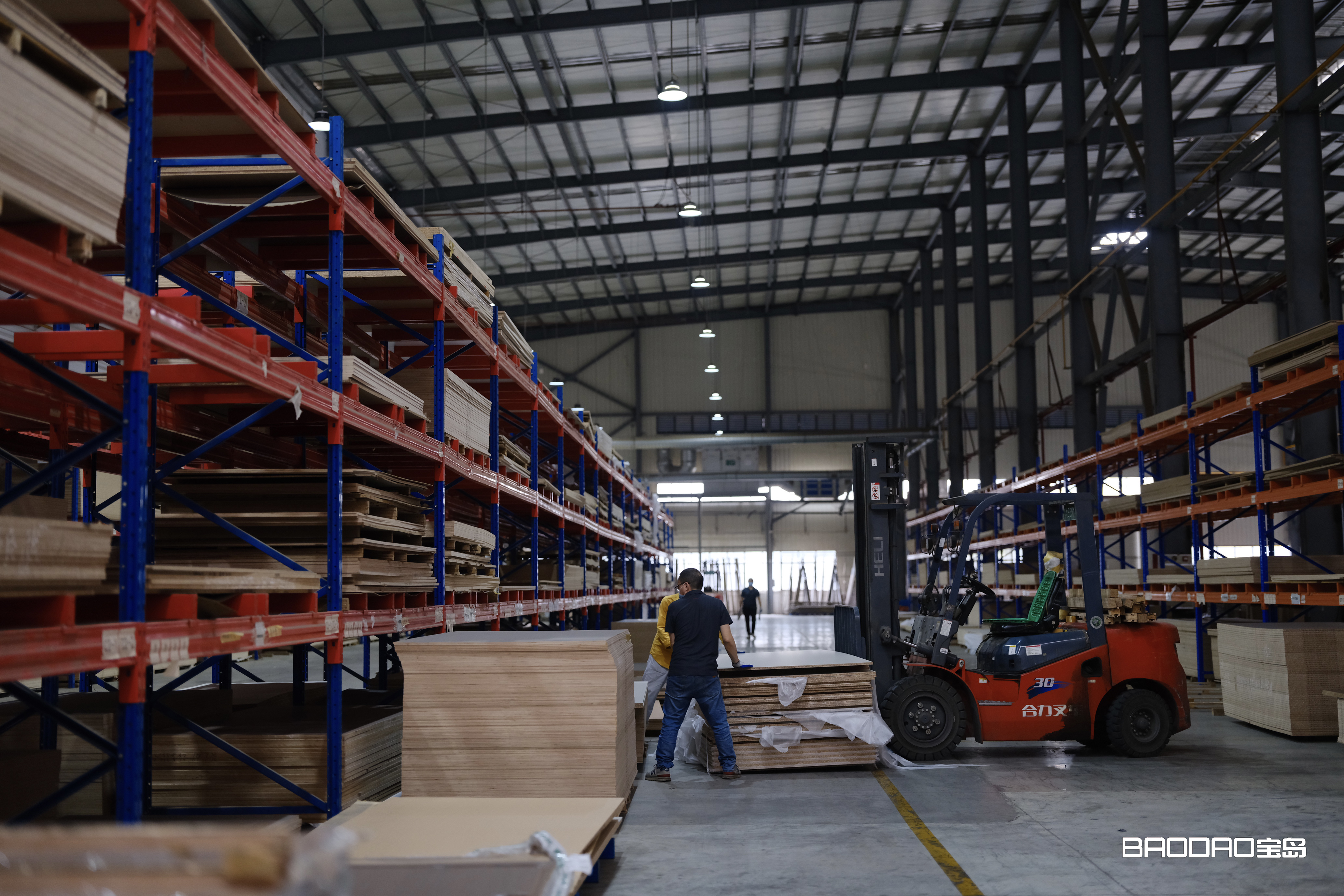
Before packaging begins, the factory checks both technical accuracy and visible finish quality. The exact acceptance points depend on the product, but the inspection generally covers the following areas:
• Dimensions and machining: panel sizes, cutting details, drilling positions and connection points are checked against the approved information.
• Surface condition: door panels, decorative panels and exposed surfaces are checked for scratches, dents, contamination and obvious colour variation.
• Edge banding: edges are reviewed for flatness, adhesion, completeness and a clean transition at corners.
• Door and drawer alignment: gaps, clearances and opening relationships are checked for a consistent visual result.
• Hardware operation: hinges, drawer runners, lift-up mechanisms and other fittings are tested for correct installation and smooth movement.
• Material direction and consistency: wood grain, colour, texture and panel orientation are reviewed against the design intent.
Special finishes require extra attention. Veneer panels need visual continuity between adjacent pieces, lacquered doors need a clean surface, glass components need careful edge and hardware checks, and aluminium frames or profiles need to remain straight and free from visible damage.
The goal is not simply to find defects at the end of production. It is to identify anything that could affect assembly, appearance or installation while the factory can still correct it efficiently.
Inspecting parts individually is essential, but it cannot reveal every issue. Many problems only become visible when cabinet carcasses, doors, drawers, shelves, glass elements and neighbouring modules are assembled together. Factory pre-assembly - also called trial assembly - brings part of the future site installation process into a controlled factory environment.
During pre-assembly, the team checks four key relationships:
• Dimensional fit: cabinets, doors, open shelves, fillers and adjoining modules need to connect accurately.
• Function: hinges, drawers, runners and special opening systems need to operate without interference.
• Structure: floating units, glass cabinets, unusual forms and special connection details need to meet the intended assembly logic.
• Visual alignment: door gaps, joint lines, wood grain, finish transitions and hardware colours need to read as one coordinated design.
For integrated door-wall-cabinet packages, trial assembly is particularly valuable. It allows the factory to review junctions between cabinetry, wall panels and door systems before the products are separated and packed for shipping.
Pre-assembly does not necessarily mean that every cabinet is shipped as one fully assembled unit. Depending on the design, dimensions and transport plan, approved modules may be dismantled after verification and packed in a more efficient form. The purpose is to prove the fit and installation logic before dispatch.
If the inspection or trial assembly identifies a problem, the relevant component is adjusted, reprocessed or reproduced before shipment. The corrected area is then checked again rather than moving directly into packaging.
For example, an inaccurate wall-panel angle can be corrected while the matching components are still available in the factory. An uneven cabinet-door gap can be adjusted and retested. A damaged finish can be repaired or replaced before it becomes part of an overseas delivery issue.
This correction-and-reinspection loop is an important difference between a simple final check and a controlled acceptance process. Only conforming components should proceed to labelling and packing.
A large custom joinery order can contain hundreds of panels, doors, profiles, fittings and hardware items. Clear identification is essential, especially when several rooms or unit types are delivered in the same container.
Before dispatch, outer packaging is identified by project and room, with package or module references matched to the packing list. Hardware and small accessories are grouped and classified to reduce the risk of items being lost or mixed between spaces.
This labelling system supports three practical tasks at the destination: checking received quantities, unloading packages in a logical order and locating the correct components during installation. Good traceability does not replace accurate production, but it makes an accurate order much easier to manage on site.

Professional custom cabinetry packaging is more than wrapping every product in the same material. Different finishes and components face different transport risks, so protection needs to be selected according to the product.
• Lacquered and painted panels: surface protection and cushioning help reduce scratches, rubbing and corner damage.
• Wood veneer: protective layers help preserve the visible grain and reduce friction between finished faces.
• Glass doors and shelves: fragile components receive separate protection and are positioned to reduce shock during handling.
• Aluminium frames and long profiles: reinforced support helps reduce bending or deformation in transit.
• Hardware and small accessories: classified packages help prevent loss and keep fittings associated with the correct room or module.
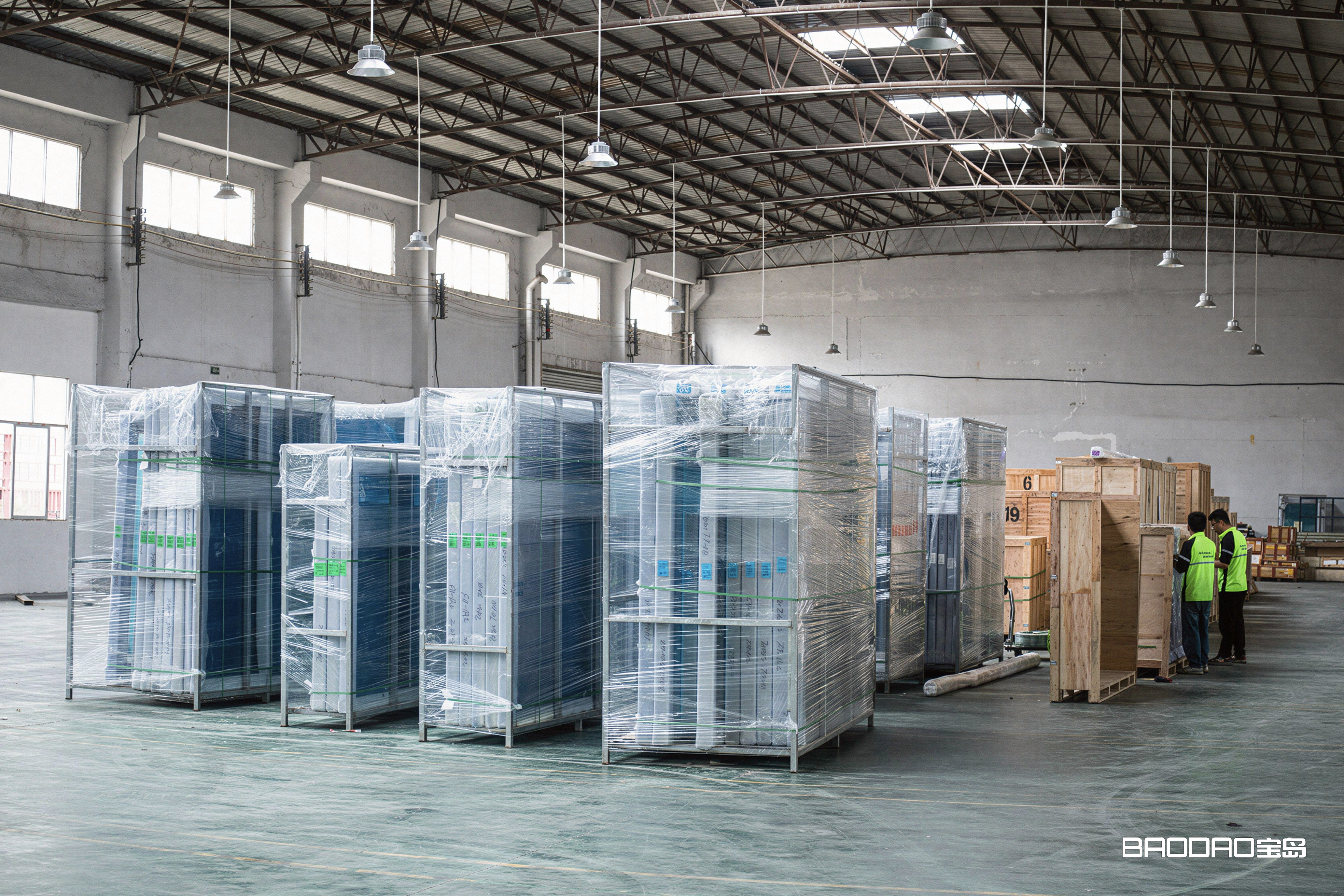
Depending on the component and shipping requirement, protection can include surface film, corner guards, cushioning materials, reinforced cartons, wooden-frame cases and separate packing for fragile items. The objective is to preserve the condition accepted at the factory throughout handling and long-distance transport.
After packaging, the order is checked again before container loading. At this stage, the focus shifts from individual product quality to shipment completeness, package identification and safe loading organisation.
The dispatch check confirms:
• the required product and package quantities are complete;
• package numbers correspond with the packing list;
• products for different rooms or zones are clearly classified;
• hardware and accessory packages are included;
• fragile components are positioned according to handling requirements; and
• the loading sequence supports practical unloading and installation at the destination.
Package dimensions, weights and contents are recorded for logistics coordination. Shipping references and bill-of-lading information can then be used by the project team to follow the shipment through the tracking options available from the carrier or logistics provider.
Loading order matters. Packages that need to be unloaded first should remain accessible, while fragile and heavy items need to be positioned with their handling requirements in mind. This turns container loading into the final stage of project delivery planning rather than a simple warehouse task.

A rigorous factory quality-control and shipping workflow cannot remove every variable from an overseas construction project. Site dimensions, building conditions, access, storage and installation workmanship still need to be managed locally. However, completing more verification before dispatch can reduce avoidable uncertainty.
• Fewer preventable site issues: dimensional, hardware and finish problems can be addressed while factory resources are available.
• More efficient installation: verified assembly logic and organised package references help the site team work more systematically.
• Better shipment visibility: labelled packages and a reconciled packing list make quantities and room allocations easier to check.
• Stronger finish protection: material-specific packaging helps preserve visible surfaces during international transport.
• Clearer project coordination: the factory, logistics team and destination team work from the same shipment structure.
Factory pre-assembly verifies how separate components fit, operate and align as a complete system. It can reveal issues that are difficult to detect when panels are inspected individually, including uneven gaps, hardware interference, incorrect junctions and misaligned grain or finish transitions.
Not always. The appropriate shipping form depends on cabinet size, design complexity, access conditions and container efficiency. Products can be trial-assembled for verification, approved, and then dismantled into clearly identified packages for safer or more efficient transport.
Packages are classified using project, room, cabinet or module references and matched to the packing list. Hardware and small accessories are grouped so the destination team can check quantities and locate the right components more efficiently.
Packaging is selected according to the material and transport risk. Glass, lacquered panels, veneer, aluminium profiles and hardware require different protection. Measures can include surface film, cushioning, corner guards, reinforced cartons, wooden-frame cases and separate fragile-item packaging.
No process can eliminate every site variable. Verified site measurements, approved drawings, suitable storage and qualified installation remain essential. Factory quality control reduces product-related and coordination risks that can be identified before dispatch; it does not replace good site management.
Project teams should confirm site measurements, approved shop drawings, materials and finishes, hardware selections, appliance information, installation conditions and any relevant access constraints. Clear approvals create the reference point for production, inspection and pre-assembly.
The finished appearance of a high-end interior may be a clean wall of cabinetry, a precise shadow line or a door gap that remains consistent across an entire room. Achieving that result depends on a coordinated chain of design, manufacturing, custom cabinetry quality control, factory pre-assembly, packaging and international shipping.
At Baodao Home, the purpose of the pre-shipment process is straightforward: verify the product while it is still inside the factory, protect it for the journey and provide the destination team with a shipment that is organised for the next stage of work.
Planning an overseas villa, apartment, townhouse or commercial joinery project? Share your drawings, project location and required product scope with the Baodao Home team. We can review the manufacturing, pre-assembly, packaging and delivery requirements for your custom cabinetry package.
Block Quote