
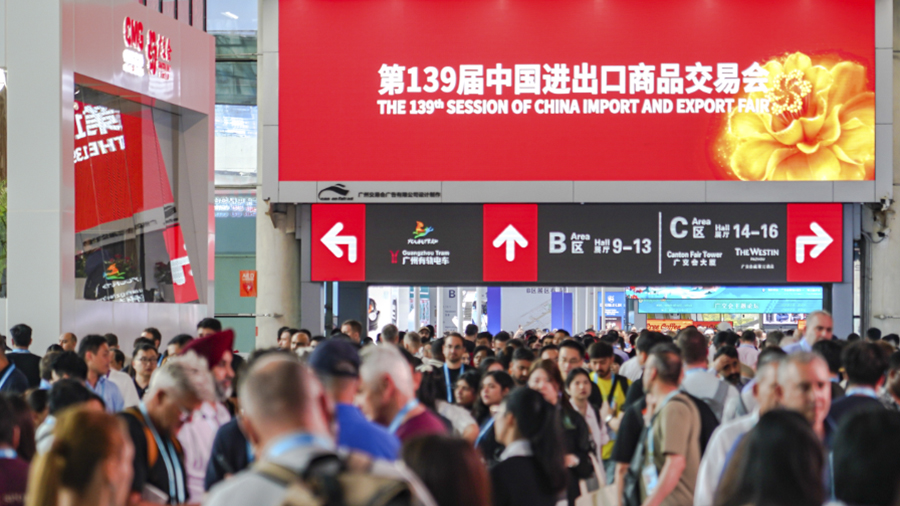
The 140th Canton Fair is about to grandly open in Guangzhou. As a weather vane for observing China's foreign trade and global consumption trends, the Canton Fair attracts tens of thousands of architects, builders, buyers, and developers from all over the world every year.
However, walking through today's international market, a profound transformation is taking place: overseas market demand for Chinese home furnishings is no longer simply about purchasing single items, nor is it satisfied merely with the cost-effectiveness of "Made in China."
From "product export" to "spatial customization," Chinese home furnishing brands are searching for new modes of global expression.
With the evolution of design concepts for global high-end residences and the elevation of construction standards, what kind of Chinese custom brands do overseas markets actually need? Extending from the node of this year's Canton Fair, the underlying logic of Chinese home furnishing brands going overseas is undergoing profound restructuring across four major dimensions.

In the past, overseas buyers were accustomed to "jigsaw-style" procurement: sourcing kitchen cabinetry from Factory A, interior doors from Factory B, and wardrobes or wall panels from Factory C. However, this model frequently failed when faced with modern minimalist design and high-end residences—materials from different manufacturers showed visible color variations, hardware specifications were inconsistent, and finishing details often interfered with one another.
Today, overseas residential projects increasingly pursue visual integrity and a sense of order. From social kitchens and walk-in robes to floor-to-ceiling wall paneling and concealed doors, the market urgently requires brands that can provide integrated "doors, walls, and cabinetry" spatial systems. Overseas clients are no longer buying individual products; they are procuring complete spatial solutions that achieve consistent color, uniform quality, and a seamless fit.
In today's environment, where global economic and consumption philosophies are returning to rationality, simple low-price gimmicks can no longer move high-net-worth clients or professional builders. On the contrary, the secondary replacement and on-site repair costs caused by substandard quality far exceed the initial procurement price.
The overseas market's evaluation of quality has become extremely rational and rigorous:
Environmental and Health Standards: Compliance with stringent international environmental and emission standards, such as AS/NZS and NAF/E0.
Physical Performance and Craftsmanship Details: Facing climate variations across different countries (such as humid Australian coasts or dry Middle Eastern deserts), how is the moisture control and warp resistance of the panels? Is the edge banding utilizing 0.1mm-grade German PUR seamless edge banding? Can concealed hardware and heavy-duty runners endure tens of thousands of smooth opening and closing cycles?
When quality, material stability, and craftsmanship details become core elements of long-term living, high-precision industrial manufacturing capability becomes the core confidence for Chinese brands to stand out.
Cross-border custom joinery projects are not merely about buying and selling products; they are an extremely complex cross-border service chain. Overseas projects involve many pain points and long cycles, where simply "loading goods into shipping containers" is far from enough.
A truly mature overseas custom joinery brand must possess strong cross-border project coordination and closed-loop service capabilities:
Design Shop Drawing Capabilities: The ability to seamlessly interpret overseas architectural drawings and output precise construction shop drawings.
Pre-Emptive Risk Control: The ability to conduct 1:1 factory pre-assembly prior to dispatch, ensuring all components completely eliminate structural deviations before shipment.
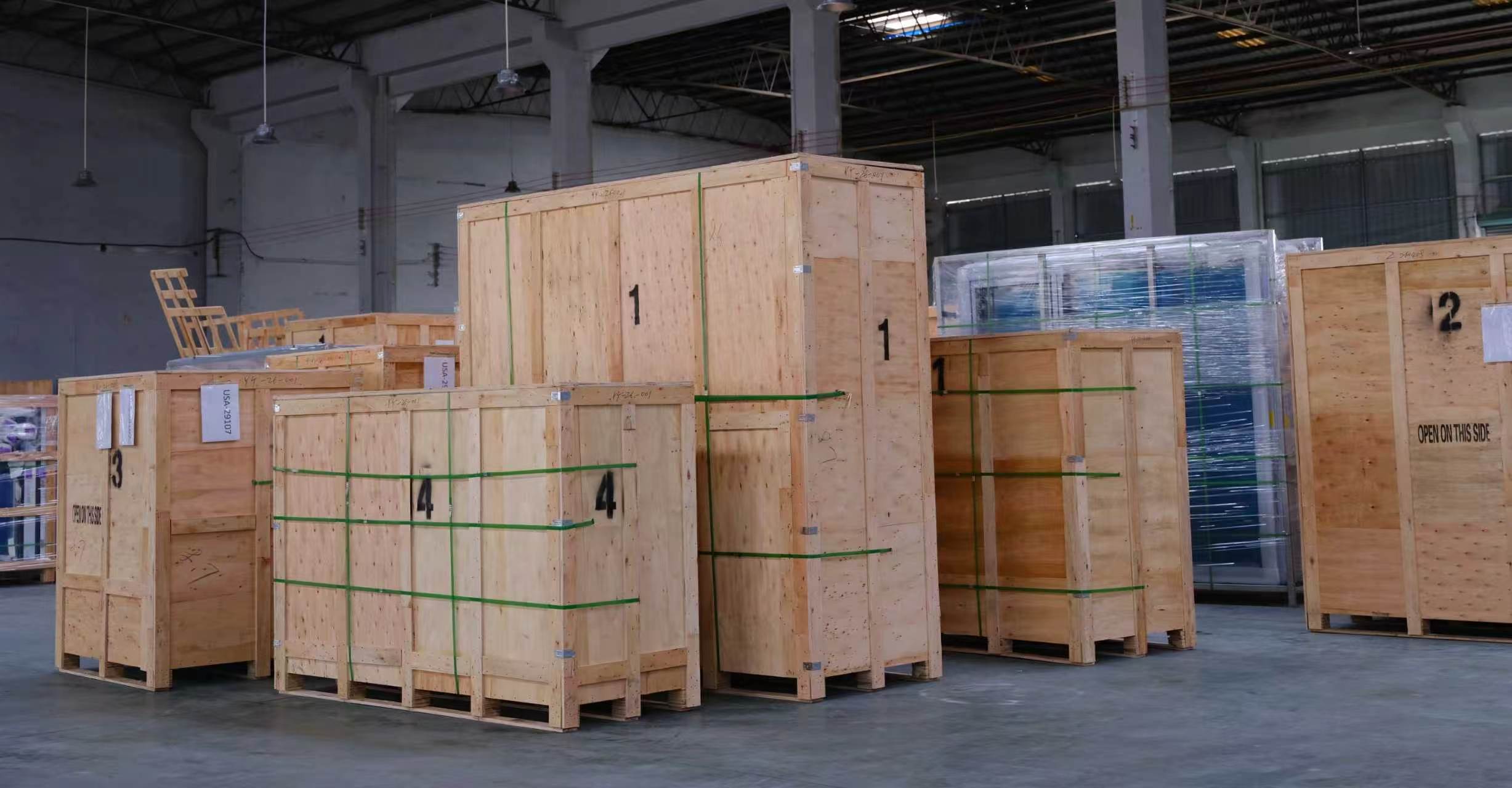
Cross-Border Logistics and Site Execution: Possession of damage-resistant packaging, moisture-proof container loading, as well as remote technical guidance and standardized installation guidelines for overseas installation crews.
Moving from "selling boards" to "delivering deterministic installation services" is the most critical leap for high-end custom joinery going overseas.

For a long time, Chinese home furnishing manufacturing has been world-renowned for its powerful OEM/ODM contract manufacturing capabilities. However, with the rise of a new generation of smart manufacturing enterprises in China, the reliance on low-margin contract manufacturing is being broken.
Today's overseas market is beginning to accept and anticipate Chinese brands with clear design logic, complete product systems, and independent aesthetic expressions. From building high-standard smart manufacturing bases and developing climate-adaptive product systems to establishing sound after-sales guarantees and B2B trust mechanisms, Chinese custom brands are transitioning from "invisible factories" behind the scenes to "international brands" on the main stage.
BaoDao Home Furnishing’s Full International Support Capabilities from "Manufacturing" to "Delivery"
From the Foshan manufacturing base to overseas residential projects, and from product exports to spatial customization services, BaoDao Home Furnishing has continuously built its product, design, and manufacturing systems around whole-house custom joinery since its establishment in Foshan in 2008.
The brand's portfolio encompasses melamine, lacquer, timber veneer, PET/EB, aluminum-glass, leather, and other product series, featuring systematic designs centered around interior doors, wall paneling, and integrated cabinetry.
Through unified design standards and craftsmanship systems, different materials and spatial elements can establish a more complete visual relationship.
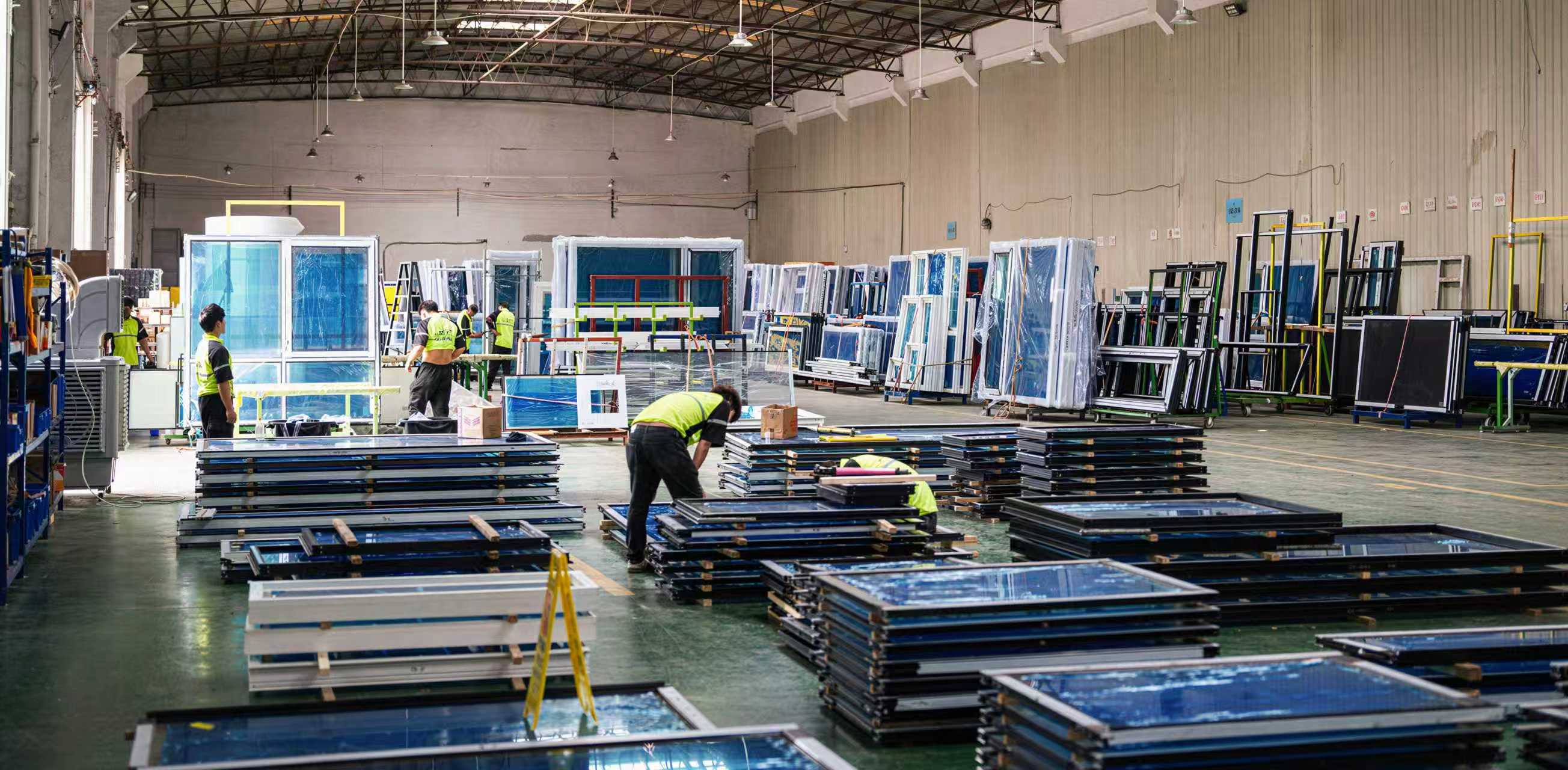
Relying on modern production facilities, the company has built standardized and digital production management—coordinating intelligent equipment such as German HOMAG machinery via ERP and MES systems to achieve refined management across the entire workflow, from cutting, edge banding, drilling, sorting, pre-assembly, to packaging.
To address the complex cross-border service chains of overseas projects, BaoDao Home Furnishing extends its manufacturing capabilities to the delivery stage. It has introduced full-element pre-assembly testing before factory dispatch, strictly reviewing cabinet structures, panel matching, and hardware to eliminate installation risks right inside the factory, combined with standardized damage-resistant packaging.
Today, BaoDao Home Furnishing's overseas business covers multiple countries and regions across Australia, North America, Southeast Asia, the Middle East, and Europe. It has also established a brand showroom in Malaysia, achieving a profound leap from a "pure manufacturing factory" to a "professional brand featuring integrated door-wall-cabinetry spatial systems with full global delivery capabilities."
From shifts in product demand to changes in design philosophies, manufacturing, and delivery methods, home furnishing overseas expansion is entering a stage that places greater emphasis on comprehensive capabilities.
Future high-end custom joinery brands must simultaneously possess:
Design Capability: The ability to understand diverse residential spaces and provide complete design solutions.
Product Capability: Rich and stable material and product systems to fulfill varied stylistic and functional needs.
Manufacturing Capability: Achieving precise production for complex custom joinery through digitalized and standardized manufacturing.
Delivery Capability: Establishing a complete project management and installation system from the factory to the overseas site.
Brand Capability: Moving further from "product export" toward a global expression of "design, quality, and lifestyle."

What the Canton Fair connects is not just an exhibition, but a continuous dialogue between Chinese manufacturing and the global market.
For the home furnishing industry, true globalization is not merely selling products to more countries, but enabling China's design, materials, manufacturing, and custom joinery capabilities to enter global residential spaces in a more integrated manner.
BaoDao Home Furnishing will continue to take whole-house custom joinery as its core, building a complete system spanning design, product, manufacturing, and delivery to explore more spatial possibilities in the global market.

Block Quote